Why Title Capitalization Confuses Writers
You’ve written a great blog, book, or article—but then comes the tricky part:
👉 Should “for” be capitalized in a title?
👉 What words should stay lowercase?
Many writers struggle with title capitalization rules, especially when switching between styles.
Even small mistakes can make your content look unprofessional, which matters whether you’re publishing a blog or preparing a manuscript for what is the process of publishing a book.
The good news? Once you understand a few simple rules, title capitalization becomes easy.
What Are Title Capitalization Rules?
Title capitalization refers to how words are formatted in headings, titles, and book names.
Different styles exist, but the most common one is Title Case, where major words are capitalized.
Example:
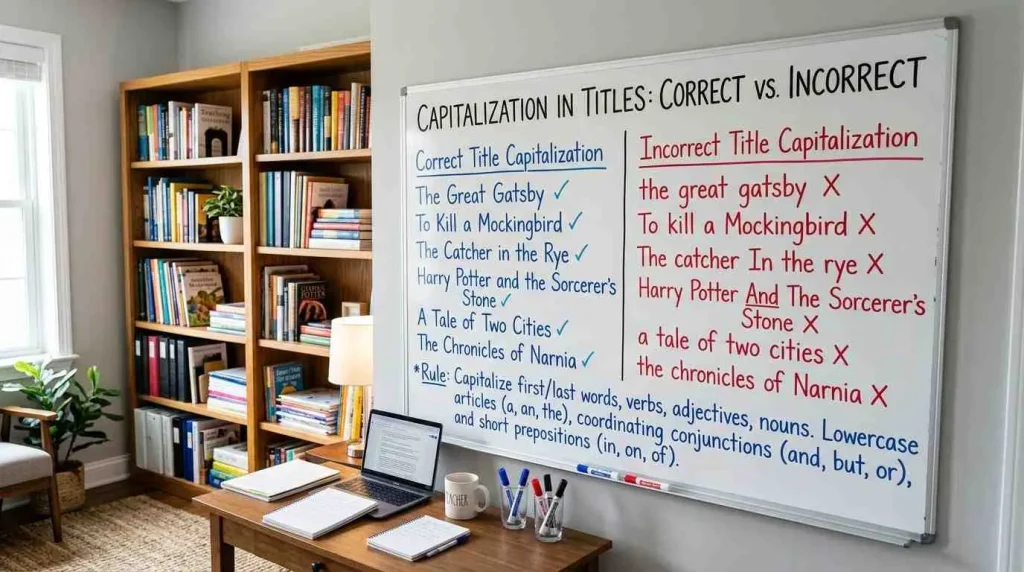
- Correct: The Best Way to Write a Book Title
- Incorrect: the best way to write a book title
These rules are especially important when structuring elements like headings and sections outlined in parts of a book.

The Most Common Title Capitalization Style
The most widely used style is Title Case.
In Title Case, you capitalize:
- Nouns (book, author, story)
- Verbs (write, create, publish)
- Adjectives (easy, simple, effective)
- Adverbs (quickly, clearly)
- Pronouns (he, she, it)
You usually do NOT capitalize:
- Articles (a, an, the)
- Short prepositions (in, on, at, for)
- Conjunctions (and, but, or)
Is “For” Capitalized in a Title?
This is one of the most searched questions:
👉 Is “for” capitalized in a title?
The answer:
- ❌ Usually not capitalized
- ✅ Capitalized only if it’s the first or last word
Examples:
- Tips for Writing Better Content ✅
- For Writers Who Want to Succeed ✅
- Writing For Success ❌ (incorrect in most styles)

Different Capitalization Styles You Should Know
There isn’t just one rule—different styles exist.
1. Title Case (Most Common)
Used in:
- Books
- Blogs
- Headlines
Example: How to Write a Bestselling Novel
2. Sentence Case
Only the first word and proper nouns are capitalized.
Example: How to write a bestselling novel
3. All Caps (Rare)
Used for emphasis or branding.
Example: HOW TO WRITE A BESTSELLING NOVEL
Why Title Capitalization Matters
It’s not just about grammar; it affects how your content is perceived.
Benefits of Proper Capitalization:
- Improves readability
- Looks professional
- Builds credibility
- Helps SEO presentation
When combined with strong editing—like the services mentioned in The Top 9 Book Editing & Proofreading Services in 2026—your content becomes much more polished.
Common Mistakes Writers Make
Avoid these frequent errors:
❌ Capitalizing every word
❌ Lowercasing important words
❌ Ignoring style consistency
❌ Misusing short words like “for,” “and,” or “to.”
Even small mistakes can reduce the impact of your title, especially when paired with visual elements like those discussed in the book cover design cost.
Easy Formula to Follow Title Capitalization Rules
Here’s a simple trick:
Step-by-Step Rule:
- Capitalize the first and last words
- Capitalize important words (nouns, verbs, adjectives)
- Keep short words lowercase (unless first/last)
Quick Example:
👉 Easy Way to Follow Title Capitalization Rules
Tools to Help You Capitalize Titles Correctly
If you’re unsure, tools can help.
Popular Tools:
- Online title case converters
- Grammar tools
- Writing assistants
You can also improve your writing accuracy using the tools discussed in the best Grammarly alternatives for writers.
Title Capitalization for Authors and Publishers
For authors, capitalization isn’t just grammar—it’s branding.
Your book title appears on:
- Covers
- Marketing materials
- Listings
This makes it essential to get it right, especially when working on a visual presentation using insights from How Much Does an Illustrator Charge for a Book Cover?
How Capitalization Impacts Book Sales
Titles influence first impressions.
A well-formatted title:
- Looks professional
- Builds trust
- Attracts readers
Combined with strong storytelling and market understanding, like insights from What’s the Average Income for Authors from Book Sales?, it can improve your overall success.
Practical Examples You Can Follow
Correct Titles:
- The Best Way to Publish a Book
- A Guide for First-Time Authors
- How to Write and Sell Your Story
Incorrect Titles:
- the best way to publish a book
- A guide For first-time authors
- HOW TO WRITE AND SELL YOUR STORY
When You Can Break the Rules
Sometimes, rules can be flexible.
You might break them for:
- Branding
- Creative style
- Specific guidelines
However, consistency is key.
FAQs:
1. What are the title capitalization rules?
They define which words should be capitalized in titles and headings.
2. Is “for” capitalized in a title?
No, unless it is the first or last word in the title.
3. What words should always be capitalized in titles?
Nouns, verbs, adjectives, adverbs, and pronouns.
4. What is title case vs sentence case?
Title case capitalizes major words, while sentence case only capitalizes the first word.
5. Why is title capitalization important?
It improves readability, professionalism, and SEO presentation.
Conclusion: Keep It Simple and Consistent
Mastering title capitalization rules doesn’t have to be complicated.
Remember: capitalize important words and keep small words like “for” lowercase—unless they start or end the title.
Consistency is what makes your content look professional and polished.
Start applying these simple capitalization rules today and instantly upgrade your content.
Because small details like titles can make a big difference in how your work is perceived—and how successful it becomes.