Introduction: The Truth About Author Earnings
Many aspiring writers dream of publishing a book and earning a steady income from it. But one question always comes up:
What’s the average income of an author?
The answer isn’t simple. Some authors earn a few hundred dollars, while others make millions.
Understanding average author earnings per book sold depends on factors like publishing method, pricing, royalties, and marketing.
Before diving into earnings, it’s important to understand what is the process of publishing a book because how you publish directly affects how much you earn.
Average Author Earnings Per Book Sold
Let’s start with the basics.
Typical Royalty Earnings:
| Publishing Type | Earnings Per Book |
| Traditional Publishing | $1 – $5 per book |
| Self-Publishing (Amazon KDP) | $2 – $10 per book |
| Hybrid Publishing | $3 – $8 per book |
These numbers vary depending on:
- Book price
- Royalty percentage
- Distribution channels

Average Income of an Author (Annual Breakdown)
Now let’s look at yearly income.
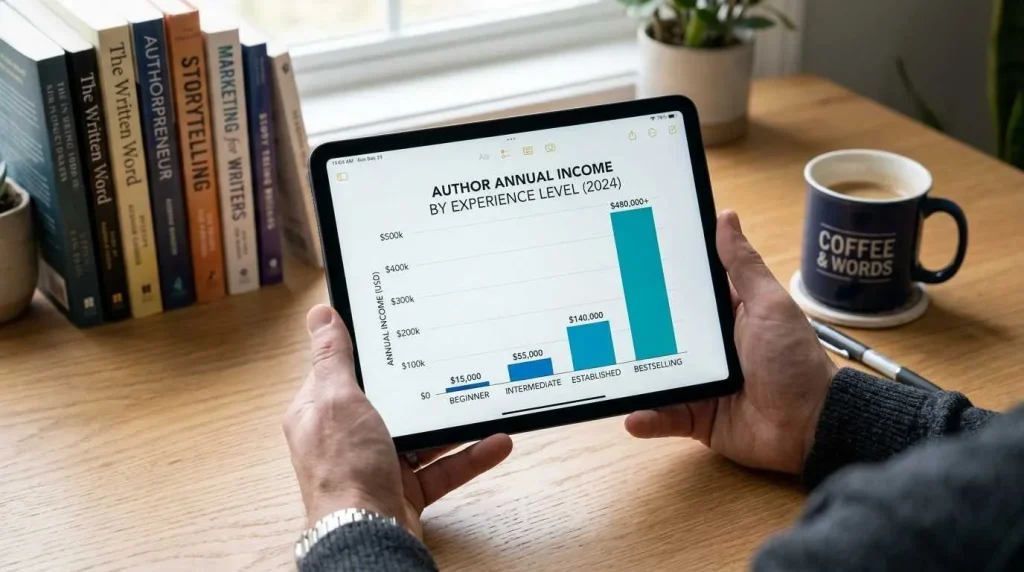
Average Income Ranges:
| Author Level | Annual Income |
| Beginner | $0 – $5,000 |
| Intermediate | $5,000 – $50,000 |
| Established | $50,000 – $150,000 |
| Bestselling Author | $150,000+ |
Most authors fall in the lower range, especially in their early years.
What Affects Author Earnings?
Your income as an author depends on multiple factors.
1. Publishing Method
- Traditional publishing → Lower royalties but wider distribution
- Self-publishing → Higher royalties but more responsibility
If you’re unsure which route to take, comparing your options alongside guides like Local Book Publishers in Texas: A Beginner’s Guide can help you make an informed decision.
2. Book Pricing Strategy
Higher prices don’t always mean higher earnings.
You need to balance:
- Market demand
- Genre expectations
- Reader affordability
3. Book Quality and Editing
A poorly edited book will struggle to sell, no matter how good the story is.
That’s why investing in professional services like those discussed in The Top 9 Book Editing & Proofreading Services in 2026 is crucial for long-term success.
4. Cover Design and Presentation
Your book cover plays a huge role in sales.
A professionally designed cover—guided by insights from book cover design cost or understanding the cost to hire an illustrator can significantly improve conversions.
5. Marketing and Promotion
Even the best books won’t sell without visibility.
Authors who invest in:
- Ads
- Social media
- Email marketing
Tend to earn more consistently.
Traditional vs Self-Publishing Earnings
Let’s compare both models.
Traditional Publishing:
- Advance payments (sometimes)
- Lower royalties (5%–15%)
- Less control
Self-Publishing:
- No advance
- Higher royalties (35%–70%)
- Full control
Many authors today prefer self-publishing because of higher earning potential.
How Much Can a First-Time Author Earn?
Realistically, most first-time authors earn modestly.
Typical earnings:
- 100–500 copies sold
- $100–$2,000 total income
This depends on:
- Book quality
- Marketing effort
- Audience reach
Planning factors like What’s the Ideal Page Count for a First-time Writer? can also influence production costs and pricing strategy.
How to Increase Your Author Income
If you want to earn more, focus on strategy—not just writing.
Proven Tips:
- Write multiple books (series sell better)
- Invest in editing and design
- Build an author brand
- Optimize pricing
Working with professionals, such as those discussed in How Much Does a Ghostwriter Cost? A Detailed Guide—can also help you scale your content output.

Hidden Income Streams for Authors
Book sales aren’t the only way to earn.
Additional Revenue Streams:
- Audiobooks
- Speaking engagements
- Online courses
- Licensing deals
Diversifying income is key to long-term success.
Common Mistakes That Limit Author Earnings
Avoid these mistakes:
❌ Ignoring editing quality
❌ Using poor cover design
❌ Setting unrealistic expectations
❌ Not marketing your book
Even technical aspects like formatting—covered in the complete guide to the perfect book layout—can impact reader experience and sales.
How Genre Impacts Earnings
Different genres perform differently.
High-Earning Genres:
- Romance
- Thriller
- Fantasy
- Self-help
Genres like horror—rooted in classics discussed in What Was the First Horror Book Ever Written?—continue to attract dedicated audiences.
Realistic Expectations for Authors
Here’s the truth:
Writing is rarely a “get rich quick” path.
Most successful authors:
- Build income over time
- Publish multiple books
- Continuously improve
FAQs:
1. What is the average income of an author?
Most authors earn between $0 and $5,000 annually, especially beginners.
2. How much do authors earn per book sold?
Typically $1 to $10 per book, depending on publishing method.
3. Can authors make a full-time income?
Yes, but it usually requires multiple books and strong marketing.
4. Do self-published authors earn more?
They often earn higher royalties but must handle their own marketing.
5. What factors affect author income?
Pricing, genre, marketing, and book quality all impact earnings.
Conclusion: What Should You Expect to Earn?
So, what’s the average income of an author?
Most authors earn modestly at first, typically between $0 and $5,000 annually.
However, with the right strategy, quality, and consistency, income can grow significantly over time.
The key takeaway:
Author earnings depend less on luck—and more on smart decisions.
If you’re serious about earning as an author, focus on quality, strategy, and consistency.
Invest in professional services, build your audience, and treat your book like a business.
Because with the right approach, your writing can become more than a passion; it can become a profitable career.